Please scroll down for the 'Incredible Me' Challenges
Incredible Me Showcase 6
Incredible Me Showcase 5
Incredible Me Showcase 4
Incredible Me Showcase 3
Incredible Me Showcase 2
Incredible Me Week 1 Showcase
Incredible Me - Week 7
This week will be focused on having some fun outdoors.
See below for Week 7 challenges (week beginning 13th July).
Also click on the links for BBC Bitesize Resources.
 |
BBC Bitesize Maths |
|
BBC Bitesize English |
Letter to new teacher
Can you write a letter to your new teacher? Tell them all about you. You could tell them about: you and your family; what you like to do at home; your hobbies; your favourite subjects in school; your friends and anything esle you can think of that you would like them to know. If you email a photograph of your letter, we will make sure it gets to your new teacher.
National Trust Challenge
Why don't you take a look at the '50 things to do before your 11 and 3/4' activities! From star gazing to crawling through mud looking for animal clues, there is something for every young explorer.
We would love to find out and see photographs of which activities you complete!
www.nationaltrust.org.uk/features/50-things-to-do-before-youre-11--activity-list
Learning through Landscapes
Check out this website - 'Learning through Landscapes':
https://www.ltl.org.uk/free-resources/
There are range of free outdoor learning ideas for you to choose from! Enjoy and have fun!
Incredible Me - Week 6
This week will be focused on the basic needs of animals, including humans, for surivial.
See below for Week 6 challenges (week beginning 6th July).
Also click on the links for BBC Bitesize Resources.
|
BBC Bitesize Maths |
|
BBC Bitesize English |
Words and Your Heart by Kate Jane Neal
We have a wonderful story in school called 'Words and your heart' by Kate Jane Neal. Watch the video of Mrs Czech reading this story. We hope you enjoy it!
The words you use are so important and really do make a difference to how people feel. We believe this is part of the needs of humans.
Your challenge... Can you write words or a sentence in each of the speech bubbles? What would say to someone if they were going to give up? What would you say to someone to encourage them to keep going? What would you say to someone to make them giggle? What would say to someone to make them grin, laugh out loud and roll around?
You could print off the sheet and write in the speech bubbles or draw your own pictures and speech bubbles?
*Kate Jane Neal is a Cornish author. You may want to research and find out more about her too!

|
Words and your heart speech bubble | [docx 632KB] |

|
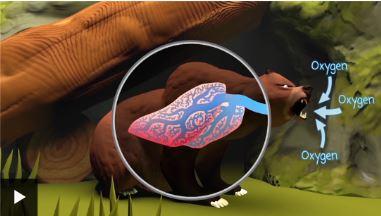
What do animals need to survive?
Watch the video. Can you find out the basic needs of animals. You may also want to complete the quiz to test your knowledge.
https://www.bbc.co.uk/bitesize/topics/z6882hv/articles/zx38wmn#:~:text=
Animals%20need%20air%2C%20water%2C%20shelter%20and%20food%20to%20survive.
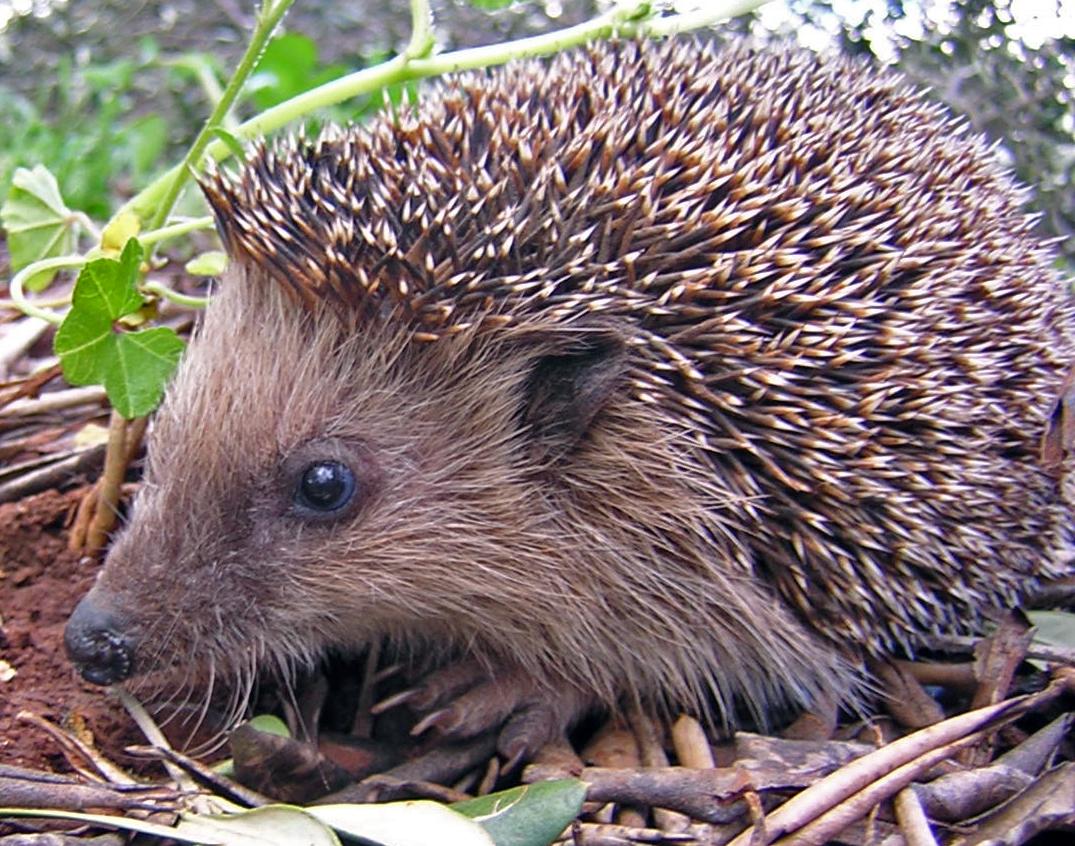
Hibernating
Some animals hibernate in the winter. Choose one animal that hibernates.
Why do some animals hibernate? Where do they hibernate?
Think! What if humans hibernated? - What would it be like to sleep for months? What would you miss if you slept all winter?
Present your research in any way that you want.
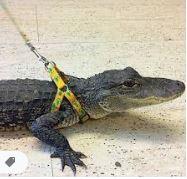
How do we look after pets?
Choose any animal you would like to keep as a pet. Be adventurous! How would you look after it's basic needs? Could you keep a cow in your bedroom? Would a badger be happy in a cage? Would you take a crocodile for a walk?
Can you produce an information sheet explaining how you would look after the pet's basic needs to ensure it survived?
Incredible Me - Week 5
This week will be focused on the life cycle of animals, understanding that animals, including humans, have offspring which grow into adults.
See below for Week 5 challenges (week beginning 29th June).
Also click on the links for BBC Bitesize Resources.
|
BBC Bitesize Maths |
|
BBC Bitesize English |
Challenge 1
Watch the BBC Bitesize clip:
https://www.bbc.co.uk/teach/class-clips-video/science-ks1-animal-life-cycles/zrg9kmn
Discussion with someone at home…
What is a life cycle?
· Can you describe the life cycle of a butterfly?
· Can you describe the life cycle of a frog?
· Can you talk about our own life cycle?
· Do plants have life cycles?
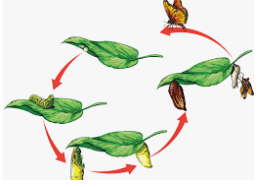
Challenge 2
Choose your own animal and produce a piece of work explaining how the animal changes as it grows. You choose how to display your learning. You could create a poster, make a booklet, write a step-by-step guide detailing the changes. It would be great to see some detailed art work alongside your writing
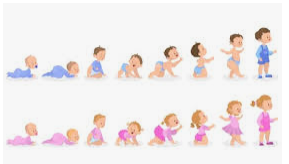
Challenge 3
‘Incredible You!’ Can you find some photos of you as a baby and also a toddler? Maybe one for each year you have been alive? How have you changed? What can you do now that you could do as a baby/toddler? How has your appearance changed?
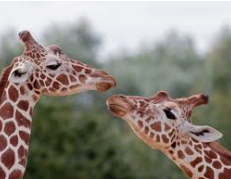
Challenge 4
Fascinating Facts…about animal life cycles. Can you find out any interesting facts about animals and how they change? You might have some information books or you could use the Internet to carry out your research.
Incredible Me - Week 4
See below for Week 4 challenges (week beginning 22nd June).
Also click on the links for BBC Bitesize Resources.
|
BBC Bitesize Maths |
|
BBC Bitesize English |
Challenge 1 - Alberto Giacometti - Stick Figure Sculpture
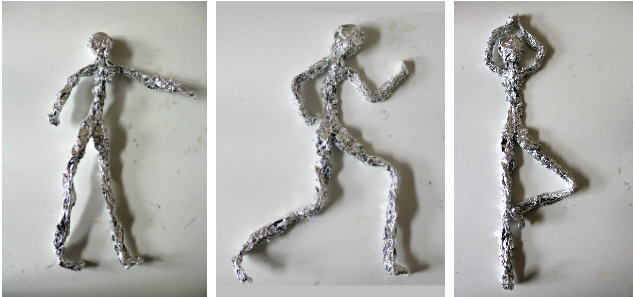
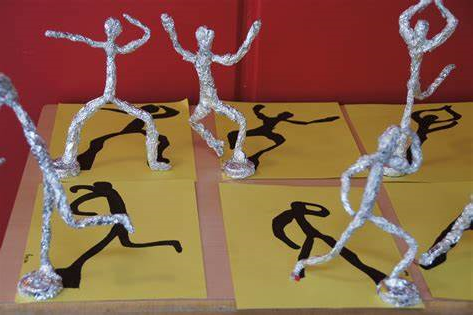
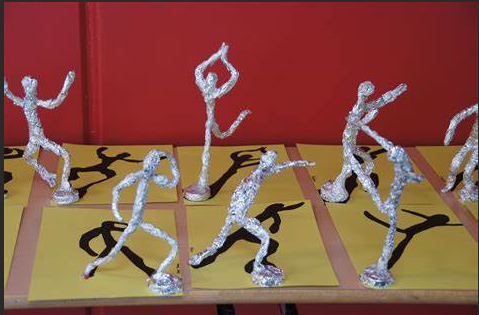
Explore the artist Alberto Giacometti. You could take a look at this website to find out about this artist and see examples of his work:
https://nurturestore.co.uk/giacometti-sculpture-art-project-for-kids
Can you create your own tin foil stick figure of a person exercising?
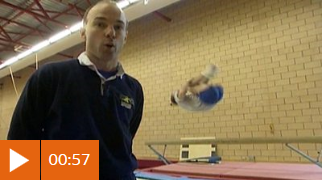
Challenge 2 - The importance of fitness
Watch the BBC Bitesize Clip:
https://www.bbc.co.uk/bitesize/clips/z274d2p
Can you design your own poster explaining how keeping fit and exercising is important?

Challenge 3 – Science Experiment
What happens to your body when you exercise? What happens to your heart?
Choose 5 different exercises. Here are some examples: star jumps, hopping, knee jumps, skipping, running, bunny jumps, high knees, step ups, push ups etc.
Then complete each exercise for a minute. How did you feel after each one? Which exercise made your heart pump faster? Which exercise made you sweat more?
Now, complete each exercise for 5 minutes. What do you notice?
Record your results in any way you want.
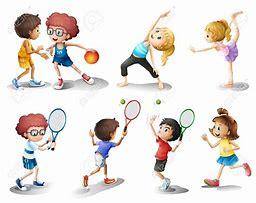
Challenge 4 – Fitness Challenges
Either complete some fitness challenges from the cards attached or take a look at the school website (see links below) where Mr Stevenson has set a range of challenges! We’d love to hear how you get on!
http://www.camelford.cornwall.sch.uk/learning/overview
_curriculum_topics/physical_education_and_wellbeing.html
Incredible Me
See below for Week 3 challenges (week beginning 15th June).
Also click on the links for BBC Bitesize Resources.
|
BBC Bitesize Maths |
|
BBC Bitesize English |
Incredible Me - Week 3 Challenges
This week we will be looking at healthy eating.
We have set 5 different challenges for you to complete!
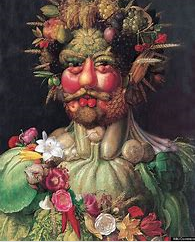
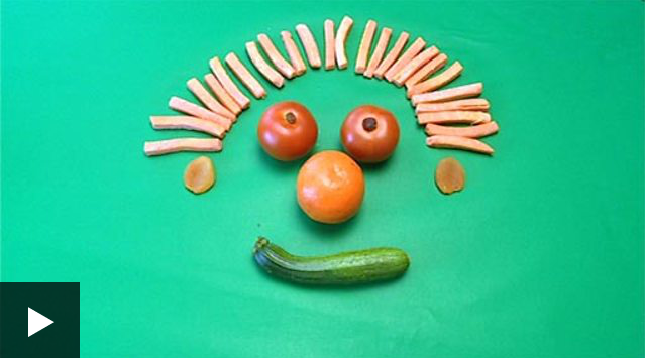
Art Challenge - Giuseppe Arcimboldo
Can you create your own picture in the style of Giuseppe Arcimboldo using only fruit and vegetables? You choose how to create your picture - you can use real fruit and vegetables or draw/paint them! Have fun!
Click on the link below to find out more about this artist:
https://artsmartforkids.wordpress.com/art-projects/giuseppe-arcimboldo/
The 'Five a Day' song - eating fruit and vegetables
Click the link to watch this BBC Bitesize video.
https://www.bbc.co.uk/bitesize/clips/z2pxpv4
Talk with your family at home about 'healthy eating'.
What healthy foods do you enjoy?
Are there any healthy foods that you don't enjoy?
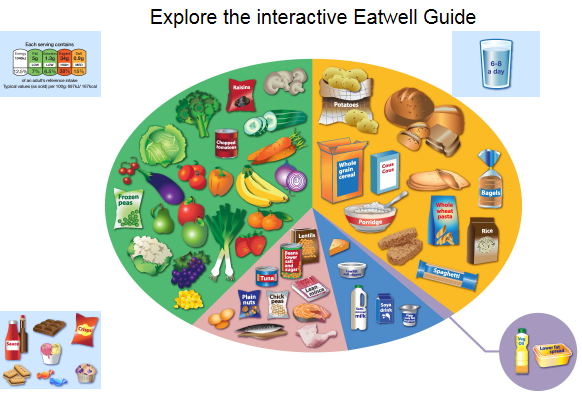
Explore the Interactive Eatwell Guide
Click on the link below to explore the Interactive Eatwell Guide
https://www.nhs.uk/live-well/eat-well/the-eatwell-guide/
Can you produce your own Eatwell Plate based on what you've eaten during a day?
Have you managed to eat healthily by eating foods from each food group?
Healthy Eating ABC
Alphabet Challenge Time
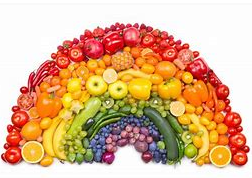
Can you think of a different fruit and vegetable for each letter of the alphabet?
For example:
A - Apple
B - Blackberry
C - Courgette
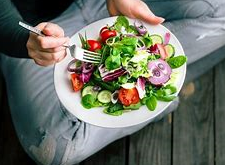
Make a Healthy Meal
Can you help an adult to make a healthy meal? This could be breakfast, lunch, tea or even a healthy snack! We would love to see photos of your creations!
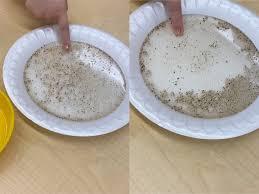
Science: How does soap work?
Discuss with your child the importance of washing, in particular their hands. Ask them: Why do we wash our hands? What do we use to wash our hands? Is it important to wash your hands before eating? Why?
Have a go at this experiment!
You will need: a bowl, some water, a sprinkle of black pepper or another spice and liquid hand soap.
Fill the bowl with some water and sprinkle your pepper/spice on to the surface. (It should float). Dip your finger into the centre of the spice and watch what happens.
Dry your finger and dip it into some liquid hand soap. Dip your soapy finger into the centre of the spice of water and watch what happens this time. Did you notice a difference?
Don’t forget to take photos to show what happens each time you put your finger into the bowl.
Record your results in any way you choose.

Music
Follow the link to listen to a song about handwashing:
https://www.youtube.com/watch?v=S9VjeIWLnEg&safe=active
Have a go at creating and writing your own song about washing your hands.
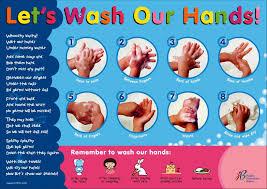
Art: Personal Hygiene
Talk with your child about personal hygiene; what does it mean? What does it include? (Brushing teeth, bathing/showering regularly, washing hands, wearing clean clothes, minimising the spread of germs where we can).
Create an informative poster to show how we can all look after ourselves when thinking about our personal hygiene.
Computing
Follow this link to watch the BBC Bitesize video: What do humans need to stay healthy?
https://www.bbc.co.uk/bitesize/clips/zgtr82p
Discuss with your child what they have seen in the short clip. Ask them to think about what they do to try and stay healthy. Support your child to sequence their day. You could present this as a sequence of pictures, a diary of your day or in any other way you choose. After, talk through what you notice about the day. Did you do any exercise? What healthy foods did you eat? What good hygiene practices do you have?
Incredible Me!
Welcome to our new topic, titled 'Incredible Me!'
This topic will be focused on... YOU! We are all different and that's what makes us special and unique.
We will also be exploring many science areas and answering questions, such as:
How can we keep healthy and hygienic?
What are our basic needs to survive?
How do we and other animals change and grow?
Like 'Camelford Explorers', we will set different challenges each week. Please continue to email photographs and videos of any completed challenges, so we can put together a weekly showcase to celebrate your home learning.
Please also remember to keep reading. Oxford Owl has a wide range of free ebooks. You can also arrange to swap your reading books and collect some more from school. Please email year1_2@camelford.cornwall.sch.uk if you would like to arrange for this to happen.
Please see below for Week 1 Challenges...

What's incredible about you?
We are all special and no-one is exactly like you! What makes you incredible? You choose how to present your work. You might choose to write a list, make a poster or even write a story.
BBC Bitesize Maths
We will continue to use BBC Bitesize for Maths.
Click on the link below:
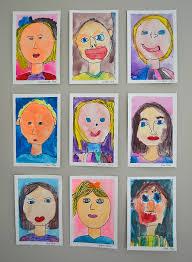
Self-portrait
Can you produce a self-portrait? Make sure you have a mirror so you can look carefully at yourself and all of your features. You choose... draw, paint, collage...
BBC Bitesize English
We will now also use BBC Bitesize for English.
Click the link below:
Camelford Explorers Certificate
Please feel free to download and print the certificate for completing the challenges set during our Camelford Explorers Topic.

|
certificate PDF | [pdf 8MB] |
|
Week 6 Camelford Explorers Showcase
Week 5 - Camelford Explorers Showcase
Week 4 Camelford Explorers Showcase
Week 3 Camelford Explorers Showcase
Week 2 Camelford Explorers Showcase
Week 1 Camelford Explorers Showcase
Years 1/2 Home Learning
Each week we will set a range of tasks and activities for you to complete at home.
Please do not feel you have to complete all the activities we are suggesting. They are just ideas to support you in this difficult time.
We would love to see photos of any challenges you complete from the ‘Home Learning Challenges’. At the end of each week we will put together a showcase, celebrating all the wonderful challenges you have completed at home. If you would prefer for your child’s photos to not be shared on the school website or Facebook page, this is absolutely fine. Please just let us know this when you email them.
If you have any questions or queries relating to any of the tasks and activities, please just email us on our joint Year 1/2 email (year1_2@camelford.cornwall.sch.uk). You may want to know what level your child is for reading, what RWI stage they are on, what their Times Table Rock Stars/Numbots logins are… We are more than happy to help in whichever way we can.
Each week we will set:
- Home Learning Challenges related to ‘Camelford Explorers’.
- Maths activities from White Rose/BBC Bitesize. There will be 5 activities for the week. Each activity has a short video to show you how to support your child and complete the activity. Then there is a short activity which follows. *Please do not feel you have to print the activity sheets. You can just ask your child to discuss the answers to the set questions or you may choose to write down the answers on a piece of paper.
*Remember your child can access the online programmes ‘Times Table Rock Stars’ and ‘Numbots’. Just email if you need their login details.
- Reading. Please encourage your child to read on a daily basis. This may just be 5 minutes each day.
Oxford owl has a wide range of free electronic books for you to access. Click on the link below and this will take you to a wide range of e-books. You can then filter by reading stage, book type and also by series. *There are over 70 Read Write Inc Books on this website for you to access.
Link for online library of e-books:
You can also access a range of free resources linked to Read, Write, Inc. There are videos, e-books and a range of activities linked to the different stages of the programme.
https://home.oxfordowl.co.uk/reading/reading-schemes-oxford-levels/read-write-inc-phonics-guide/
The link below will take you to a Read, Write, Inc website where you can see when the daily virtual RWI lessons take place and useful videos to help you support your child.
https://www.ruthmiskin.com/en/find-out-more/parents/
*If your child has completed the Read, Write, Inc programme and are now on Accelerated Reader, please follow the link on the Year 3/4 tab on the school website for further information and resources.
Our Community, Our World - Camelford Explorers
Week 6 – Seaside Towns in the UK
Recap on what you have been learning these last few weeks: What do you know about the seaside? What is the seaside like? What things can you do at a seaside resort? Why do people visit seaside resorts? What are these people called? Where have you visited that was at the seaside?
As this is our last week of Camelford Explorers, we would like you to choose your own seaside town in the UK to research.
To give you some ideas, watch the BBC Video: ‘Barnaby Bear - A visit to the seaside’ https://www.bbc.co.uk/bitesize/clips/z8mn34j.
Barnaby Bear visited Poole which is one of the busiest harbours in the world. You could choose to research Poole and investigate the different types of boats that enter Poole Harbour. What type of boats would have bought goods to the warehouses? What cargo did they carry? Poole is also a tourist town, so you could produce a brochure to encourage people to the area, showing them what is available to do in Poole.
Or, maybe you and your family have a favourite seaside resort that you like to visit. You could choose to study Weston-super-Mare, Blackpool or Brighton, anywhere on the coast. It’s up to you!
Good luck Camelford Explorers! We can’t wait to see your final project work.

Computing and Mapping
Computing
Remember you know how to use Google Earth now, so find your seaside town and then zoom in to see what human and physical features it has.
Mapping
Use your new mapping skills to draw a map of your seaside town, with symbols and a key.
English
You could write an interesting fact file, create an informative brochure or make an eye-catching poster about your seaside town.
Art
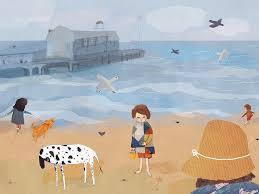
Create a seaside scene including the key features you have found. Use a range of collage materials. Do you need to add a pier, harbour or lighthouse for your chosen seaside resort?
Science
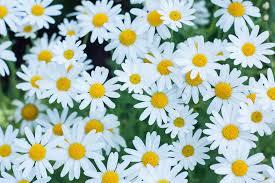
Do all daisies have the same number of petals?
Have fun answering this question and record your results in any way that you choose!
We look forward to seeing the results!
*Please also continue your observations!
BBC Bitesize Maths Year 1 and Year 2
We will continue to use the BBC Btiesize for our home learning for Maths.
Click on the links below.
Each weekday there will be a new video with follow-up activities. We hope you enjoy them!
|
BBC Bitesize Maths Year 1 |
| *Week beginning 18th May | |
|
BBC Bitesize Maths Year 2 |
| *Week beginning 18th May |
Our Community, Our World - Camelford Explorers
Week 5 - Seaside Towns in Cornwall
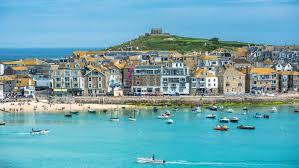
Have you heard of St. Ives? This week, we would like you to research St. Ives or you could choose your own favourite seaside town in Cornwall.
What sort of area do you think St. Ives is? How do you know? (Discuss the fact it is on the coast in Cornwall, on the southernmost tip of England and the fact it is in a bay.) What things do you think you might see if you visited St. Ives? What things might be man-made? What might be natural?
Watch the video clip ‘Visit Cornwall’s Guide to St. Ives Bay’ https://www.youtube.com/watch?v=dksyH4JmfKE
or take a look at ‘Visit Cornwall’ videos on YouTube for other seaside towns. https://www.youtube.com/channel/UCdONN1MGn8mluSGDhszZguw
Ask your child to describe St. Ives: What attractions are there? What do you think the weather is like? Why do you think tourists visit St. Ives? Do you think you would like to visit? Why? What would you choose to do?

Computing
Use Google Earth to search for St. Ives and then zoom in to around 100m. Discuss what your child can see.
Art
Can you draw pictures of the landmarks you saw in St. Ives? Can you sort them into human and physical features?
English
Imagine that you are on holiday at St. Ives and write your own postcard describing what the place is like and which attractions you have visited.
Science
Continue your observations of your animal habitat and/or your plant.
BBC Bitesize Maths Year 1 and Year 2
We will continue to use the BBC Btiesize for our home learning for Maths.
Click on the links below.
Each weekday there will be a new video with follow-up activities. We hope you enjoy them!
|
BBC Bitesize Maths Year 1 |
| *Week beginning 11th May | |
|
BBC Bitesize Maths Year 2 |
| *Week Beginning 11th May |
Our Community, Our World - Camelford Explorers
Week 4 - The Local Area
Find out about the local area. Where have you visited? (e.g. Roughtor, Bodmin Moor, Trebarwith beach, Tintagel Castle.) Are these places nearby or far away? Discuss the different type of environments using key words (e.g. village, town, countryside, seaside, coast.) Encourage your child to think about how the seaside is the same/different to their own locality.
*See below for 6 more challenges...
Cornwall My Home
Take a look and listen to this amazing performance of 'Cornwall My Home'.
The County Choirs of the Cornwall Music Education Hub have come together virtually to celebrate their home of Cornwall. Singers of the Cornwall County Youth Choir, Cornwall Boys Choir and Cornwall Girls Choir have all recorded themselves singing "Cornwall My Home": the individual recordings have been compiled into a virtual choir performance of the Harry Glasson song and arranged by Matthew Douglas.
If you would like to learn to sing this song, click on the link below:
https://voicelinks.org/my-cornwall-my-home/
*Also, on this link you will see there are 2 others songs you can learn. Click on 'Cornish Thursday' in the top right hand corner.
English
Support your child to research your nearest seaside resort. Have you visited this resort? What is it like? Do you have any photographs of your visit? How is an aerial photograph on Google Earth different from your forward-facing photograph, or a side facing photograph? Which type of photos show a bird’s-eye view? What human features (manmade landmarks, e.g. buildings, footpath, harbour) and physical features (non-manmade features, e.g. rockpools, cliffs, sandy/pebble beach, ocean) can you find? Can you find any of these features in your own photographs too?
Present your research by creating a poster on your chosen seaside resort.

Computing
Where is your nearest seaside? Using Google Earth first find the location of the school and the local area, then look at the location of the nearest coast. Where do you live? Where is the nearest seaside resort to you?
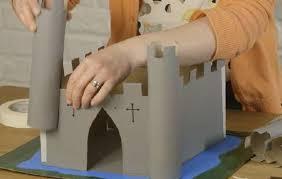
Art/DT
Draw a picture or make a model of a place you have visited.
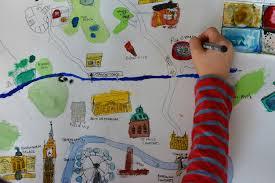
Mapping
Can you draw a map of the local area and include all the places you have visited?
Challenge: Can you include a key with symbols for your landmarks on your map?
Science
Observations, observations, observations...
If you built an animal habitat, have any bugs moved in? Can you draw and label them?
If you managed to plant a seed, what has happened? How big is the shoot? Can you draw a picture of it and meaure the shoot?
BBC Bitesize Maths Year 1 and Year 2
We will continue to use the BBC Btiesize for our home learning for Maths.
Click on the links below.
Each weekday there will be a new video with follow-up activities. We hope you enjoy them!
|
BBC Bitesize Maths Year 1 |
| *Week Beginning 4th May | |
|
BBC Bitesize Maths Year 2 |
| *Week Beginning 4th May |
Our Community, Our World - Camelford Explorers
Week 3 - My Town or Village
Find out about the local area. What buildings are in Camelford? (If you don’t live in Camelford, you could find out about your nearest town/village.) How old are some of those buildings? Find a map and see if your child can find Camelford. What human features (manmade landmarks, e.g. buildings, monuments) and physical features (non-manmade features, e.g. parkland, woodlands, rivers) can you find?
*See 4 more home learning challenges below...

Computing
Use Google Earth to find Camelford. Can you find Camelford Primary School? The Leisure Centre? What other places of interest can you find?
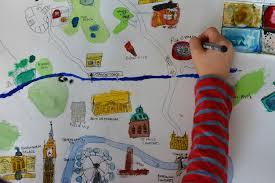
Mapping
Draw a map of Camelford and remember to include all the places of interest you have found.
Write about Camelford
Support your child to produce an information leaflet about Camelford. Include facts and pictures/drawings of the local landmarks they have found. The leaflet should convince people to want to visit Camelford, so remember to include information/pictures that show that Camelford is the best town!
Science
Follow the link to watch a video, ‘Shooting Sprouts’. Encourage your child to talk about what they see happening and what they notice.
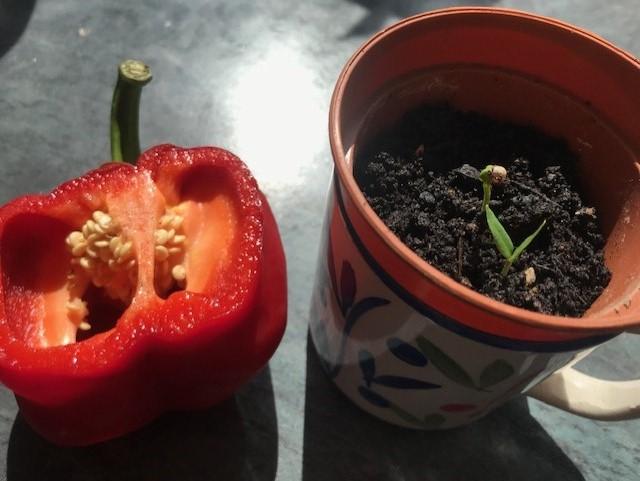
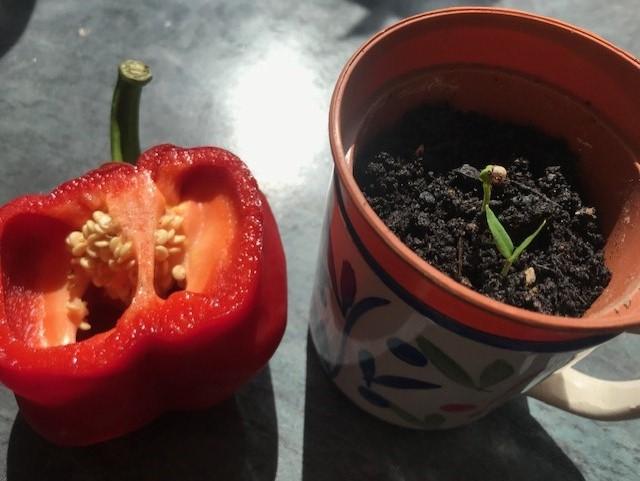
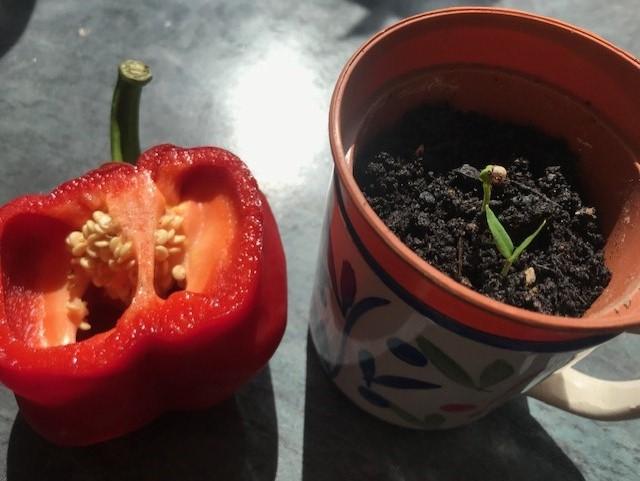
You could then have a go at planting a seed together using a seed from a fruit or vegetable you already have at home. Use a little bit of soil from the garden and pop in a yoghurt pot or something similar.
Mrs Tooley had a go using a seed from a red pepper and now she can see a shoot with leaves appearing on it!
BBC Bitesize Year 1 MATHS
We are now going to be using BBC Btiesize for our home learning for Maths.
Click on the link below.
Each weekday there will be a new video with follow-up activities. We hope you enjoy them!
|
BBC Bitesize Maths |
| *Look out for the challenges starting on 27th April |
BBC Bitesize Year 2 MATHS
We are now going to be using BBC Btiesize for our home learning for Maths.
Click on the link below.
Each weekday there will be a new video with follow-up activities. We hope you enjoy them!
|
BBC BitesizeMaths |
| *Look out for the challenges starting on 27th April |
Our Community, Our World - Camelford Explorers
Week 2 - My Street
Ask your child to look at where they live. What can they see outside the window in the front of their house? At the back of their house? What could they find near them? What type of house do they live in? What type of houses are on their street? Do they know the name of their street? Can they create a street sign with their street name?
Please see below for more home learning challenges...
Character Description
Can you write a character description about a person or animal that lives in your house? Remember to think about using adjectives to describe your chosen person or animal to help create a picture in the reader’s mind. Mrs Tooley has wrote an example about her pet cat!
My Cat
My mischievous cat is a large ball of fluff! She is a tortoiseshell cat and her name is Josie. Her soft fur is brown and black with a hint of ginger. She loves to sleep and eat. Josie prowls around the house on her four, padded paws and swings her long tail from side to side. She has sharp claws and a long, pink tongue so that she can lick her fur clean. Her large, green eyes sparkle when she is happy. Josie is a cheeky cat because she enjoys knocking things off the shelf onto the floor. My cat makes me smile because she loves to roll on her back and have tummy tickles! This makes her purr lots.
Music
Create a song about ‘Where you live’:
Can you add your address in your song? This song may give you some ideas! https://www.bing.com/videos/search?q=wher+ei+live+song+ks1&view=detail&mid=8AD2DC50644EDC666A158AD2DC50644EDC666A15&FORM=VIRE
Computing
Find your house on Google Earth https://www.google.co.uk/intl/en_uk/earth/.
Can you find your town or village? Now, search for your house on your street.
Art
Draw, paint or make a collage picture of all the different houses/buildings on your street.
Science
Following on from week 1, what wildlife have you spotted in your garden? Outside your window? Can you make a suitable habitat for an animal to live in?
You might make a bug hotel, a twig/log pile house for insects and mini beasts or a cosy nook in the garden or house for your own pet. There are many different habitats you can create using things from around your house and garden (you might even make your very own den for yourself!) Have fun and get creating!
Year 1 Maths - Week 2
Lesson 1 - Find a Half (2)
Lesson 2 - Find a Quarter (1)
Lesson 3 - Find a Quarter (2)
Lesson 4 - Problem Solving
|
Year 1 Maths Week 2 |
| *Please note we are week ahead. Click on Week 2 (27th April) **Scroll down to the bottom of the page |
Year 2 Maths Week 2
Lesson 1 - Compare lengths
Lesson 2 - Order lengths
Lesson 3 - Four Operations with length
Lesson 4 - Problem Solving
|
Year 2 Maths Week 2 |
| *Please note we are week ahead. Click on Week 2 (27th April) **Scroll down to the bottom of the page |
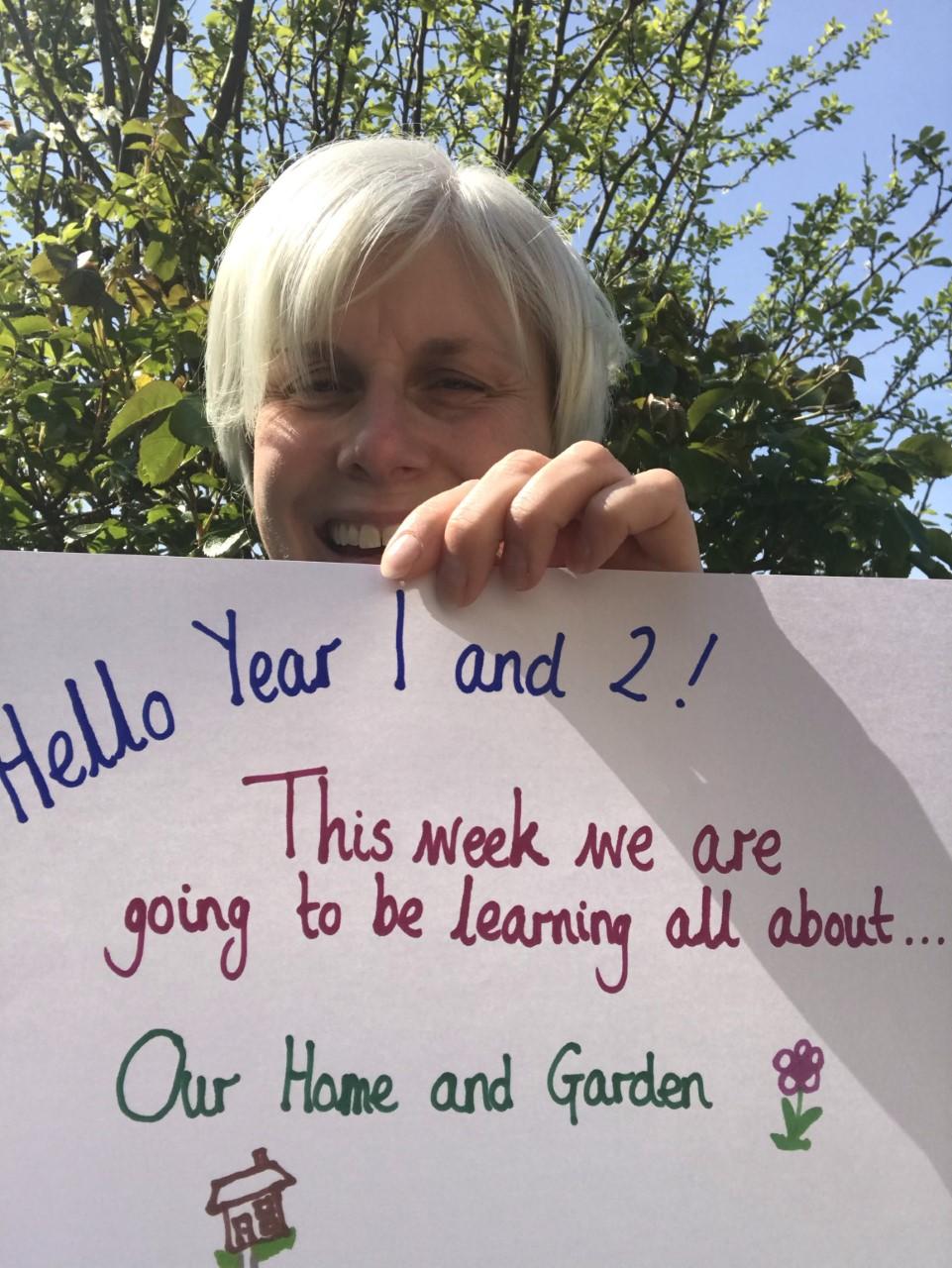
Our Community, Our World - Camelford Explorers
This project aims to provide opportunities for your child to learn more about the area in which they live. Learning will focus on your house and garden, the street you live in, your nearest town or village, landmarks and links to the local area.
Week 1 - Our Home and Garden
My address
- Support your child to find out your address. Can they find the number on your door? Can they write the number in digits and words?
- Do they know who delivers the post? Share a letter with them and explore the envelope from the front and back. Can they see any numbers on the front or back of the envelope? What do they mean? Who is the letter addressed to?
- Ask your child to write their address. Discuss the postcode and any capital letters?
- Can they write a postcard or letter to a teacher at school? They could tell their teacher about their house and garden.
- Well known addresses: Discuss with your child any well-known addresses of book characters/famous people/ historical figures they may know? e.g. 10 Downing Street, Buckingham Palace.
My house
Discuss with your child what their house looks like inside and outside? How many bedrooms does it have? Who has the biggest bedroom? Who has the smallest? Ask them to look outside their window and see if they can spot a house different to their own. Can they draw their house? How many windows at the front? How many windows at the back? Do you have one door or two?
Make a model
Make a model of your house using materials of your own choice (playdough, junk modelling, lego etc…..) What features do your need to include in your model? How many windows? What colour is your front door? How well did you do? What would you do differently next time? What have you learnt?
Science – Living Things
What living things can you find in your house and garden? Do you have any pets? Are there any houseplants inside your home? What about plants and wildlife in your garden? Use the link to access some Spot it! activity sheets from the RSPB to help you (Note: these do not need to be printed to use). You can create a picture to show all the living things you have found in your home and garden.
https://www.rspb.org.uk/fun-and-learning/for-teachers/lesson-plans-and-supporting-resources/spot-it/
Shape hunt
Take your child on a shape hunt around their house and garden. Look at the different shapes of the windows, doors, and houses. Can they name them? Are they 2D or 3D shapes?
Year 1 Maths - Week 1
Click on the link below and you will find 5 short lessons and actvities for this week:
Lesson 1 - Make Doubles
Lesson 2 - Make Equal Groups (grouping)
Lesson 3 - Make Equal Groups (sharing)
Lesson 4 - Find a Half (1)
Lesson 5 - Find a Half (2)
|
New Link |
| Year 1 Maths |
Year 2 Maths - Week 1
Click on the link below and you will find 5 short lessons and actvities for this week:
Lesson 1 - Find Three Quarters
Lesson 2 - Count in Fractions
Lesson 3 - Measure Length (cm)
Lesson 4 - Measure Length (m)
Lesson 5 - Comapre Lengths
|
New Link |
| Year 2 Maths |
Camelford Explorers
Watch this video to find out all about the Year 1/2 Camelford Explorer Challenge that will begin after Easter.
Oliver Jeffers 'Stay at home story time!'
Trevone class have enjoyed listening to many stories by Oliver Jeffers throughout the last term in school. He is one of Mrs Czech's favourite authors!
You can now hear Oliver Jeffers read some of his stories and talk about some of the things that went into making them!
Enjoy!
https://www.oliverjeffers.com/books#/abookaday/
Read, Write, Inc Virtual Lessons
Read, Write, Inc are adding 3 videos/virtual lessons to their Facebook Page and You Tube channel every week day.
Please follow link:
https://www.youtube.com/channel/UCo7fbLgY2oA_cFCIg9GdxtQ
If your child is learning Set 1 sounds, the lesson will be at 9.30am and 12.30pm.
If your child is learning Set 2 sounds, the lesson will be at 10.00am and 1.00pm.
If your child is learning Set 3 sounds, the lesson will be at 10.30am and 1.30pm.
*The videos will be live at the times above and then available for 24 hours.
There will also be Poetry Time at 2pm.
ENJOY!
Mrs Czech

Times Tables Rock Stars
Don't forget to use Times Table Rock Stars to practise your tables.
Who will be our next Rock Hero?
Look out for tournaments and challenges.
If you've forgotten your login details, Don't worry! Just click the 'Forgotten my passward' button on the TTRS website and we will send them to your parent/carer.
|
TTRS |
| Click on the link to play TTRS |
NumBots
NumBots is all about every child achieving the “triple win” of understanding, recall and fluency in mental addition and subtraction, so that they move from counting to calculating.
If you don't have your login details, just email your teacher or use the 'Fogotten Password' link on the NumBots website and we will send it to you.
|
NumBots |
| Click the link to access NumBots |